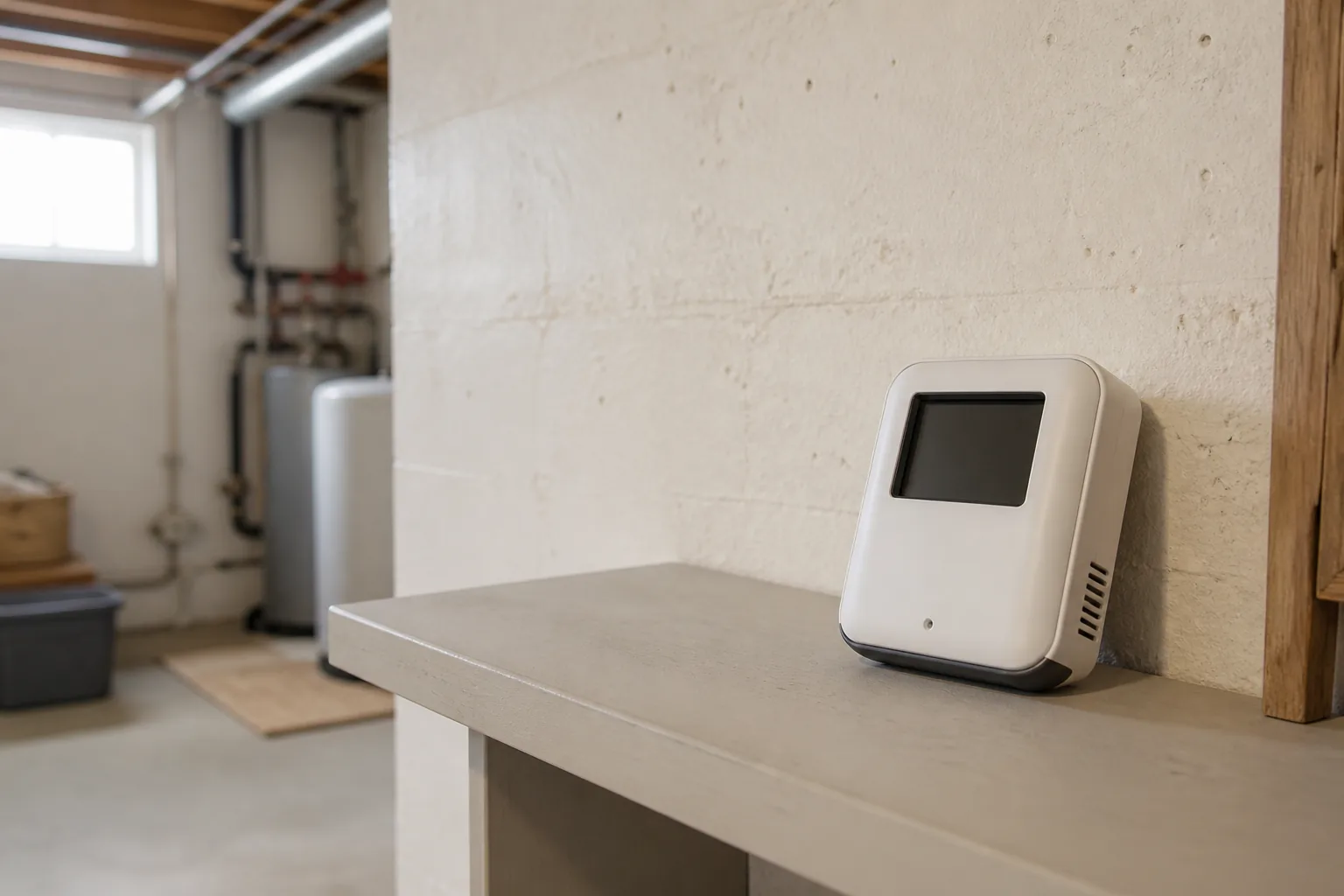
Placement guide · source-linked
Where to Place a Radon Test
Find the best room, floor, and height for a home radon test. Avoid placement mistakes that can make the result harder to trust.
Direct answer
Place the device on the lowest level used regularly, in a living room, bedroom, office, den, or open basement area. Avoid kitchens, bathrooms, closets, and storage nooks. Follow the device instructions for exact height and clearance.
Reviewed September 5, 2026. United States federal guidance. Device instructions and applicable state requirements take precedence.
Evidence standard
Built from the official primary guidance linked on this page.
Source check
Reviewed September 5, 2026 · maintained by RadonVerdict.
Choose the lowest level people actually use
The goal is to measure where exposure can occur, not simply the physically lowest void in the building. EPA's residential guide uses the lowest lived-in level. A frequently used basement belongs in the test plan; an unused crawl space does not represent a living area.
For an apartment or condominium, CDC says to use the lowest level inside your unit. Do not move the device into a building basement that is outside the occupied unit merely because it is lower.
Use a regular room, not a convenient corner
Living rooms, family rooms, bedrooms, playrooms, dens, and home offices are useful choices because people spend time there. EPA guidance excludes kitchens and bathrooms from a representative home measurement, and enclosed storage spaces do not stand in for occupied rooms.
Pick the room before opening or activating a passive device. Moving it later creates a handling question that should stay with the record.
Let the device instructions settle height and distance
CDC gives a simple public rule: raise the device three feet off the floor and place it in the middle of the room. EPA's Citizen's Guide gives additional general cautions about drafts, heat, humidity, exterior walls, and places where the device can be disturbed.
Different approved devices can specify different mounting details. Record the kit name and follow its package or laboratory instructions rather than blending numbers from unrelated guides.
Record placement so the result has context
Write down the floor, room, device name, start time, and whether the device stayed in place. A result without placement context is harder to review later, especially during a home sale or after renovation.
Run the placement through the test planner before you start, then keep the record with the laboratory result.
Turn this page into evidence
Build a procedure record
Check only what you can confirm. The summary keeps unresolved items visible instead of converting uncertainty into a pass.
Open the full test plannerCommon questions
Quick answers
Should a radon test go in the basement?
Yes when the basement is the lowest level used regularly. If it is not used, the first floor may better match EPA's lowest lived-in-level guidance. A real-estate test can follow a different placement protocol.
Can I put a radon test on the floor?
Do not improvise. CDC's general instruction says to raise the device three feet, while particular devices may provide their own mounting directions. Follow the supplied instructions.
Can I test in a bedroom?
Yes. EPA lists bedrooms among regularly used rooms suitable for a representative residential test.
Evidence boundary
Official sources used
Turn guidance into a record